



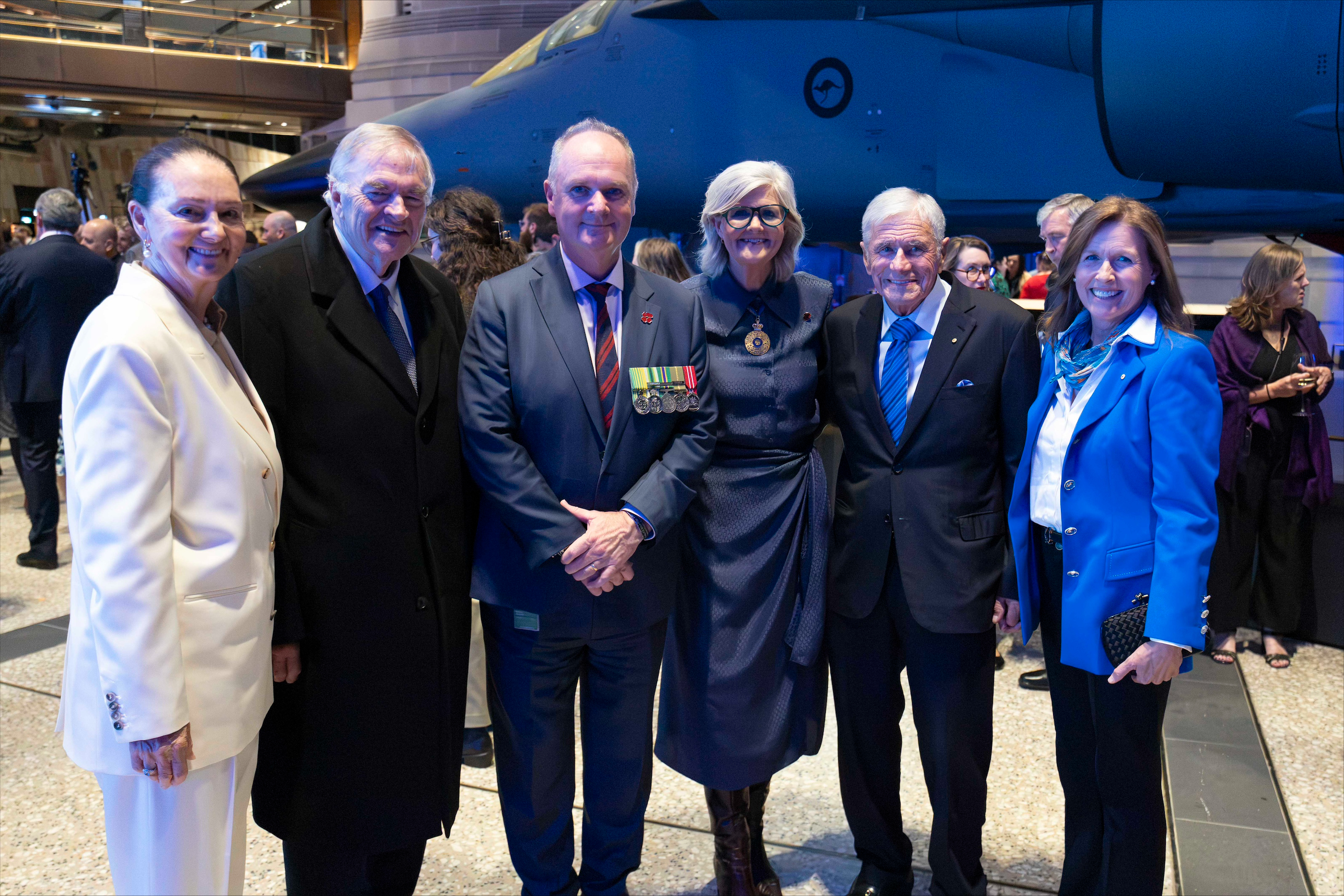
Speech delivered on 23 June 2026 at the Australian War Memorial, Canberra
I acknowledge the Ngunnawal as traditional owners of the land we meet on and recognise any other people or families with connection to the lands of Canberra and the region.
I pay my respects to elders, past and present, and all First Nations people here today, particularly those who have served our nation in uniform.
And, if you will forgive me, I will assume all protocols of acknowledgment have been observed and add my welcome to every distinguished guests here tonight.
Of course, I particularly acknowledge the Prime Minister, the Honourable Anthony Albanese MP and the Leader of the Opposition, the Honourable Angus Taylor MP, and all Parliamentarians who have come given the cessation of sitting this evening.
I particularly want to acknowledge all veterans and veteran families, the Chief of Defence Force and senior military officers here tonight, all serving defence personnel, the Chair of the Australian War Memorial, the Honourable Kim Beazley AC, and Suzy;
Director Matt Anderson and Lou; and all at the Australian War Memorial who have worked tirelessly to bring us to this moment.
I also want to thank the Council; former councillors; former chair, Kerry Stokes; former directors; and every person who worked and did anything to keep this place going and open for those million visitors. As Matt said, you built the plane while it was flying, making sure that w came here tonight to celebrate one of the great openings of our capital city.
I also want to thank Fred Smith.
Fred, sharing your beautiful anthem ‘Sapper’s Lullaby’ with us tonight was pure magic. We hardly need the words of the speeches after music like that. The lullaby has come to be part of our nation’s canon of songs of remembrance, and is so deeply meaningful to soldiers and their families, the veteran community, and all Australians. Fred, to hear it here, supported by such exceptional musicians and singers, was a very special gift for all of us here tonight.
I think we should thank him again.
It is a rare privilege, as your Governor-General, Commander-in-Chief, and a daughter of a veteran, to shortly unveil the plaque that marks this significant moment that we share together.
As we have heard so powerfully from Matt and the Prime Minister, these new galleries – the Atrium and Anzac Hall – are central elements of an historic building project.
A monumental endeavour – testing the limits of materials, innovatively futureproofing this site in astonishing ways, introducing new methods of displaying a vast and diverse collection through storytelling and reflections, and drawing on the resources of an exceptional team.
Utterly modern, but deeply connected to its storied past, these new galleries reflect history as first audaciously conceived by Charles Bean, whose ambition was to create ‘the finest memorial in the world’.
He envisioned this place of national commemoration with a clear moral purpose, reminding us that ‘to many of those to whom we owe the most, our thanks can never be given.’
With the opening of these new spaces of commemoration, learning, and reflection, we now see Bean’s vision brought to a space which can come close to offering that thanks – thoroughly contemporary with respect and candour at its core.
We are invited to understand not just the price of service, but the context in which that service was unconditionally offered – learning more about what our nation expected of those who served, and the context of the Australia they returned to.
As your first Canberra-born Governor-General, the Memorial has always been an important site of contemplation for me and my family.
I’ve been coming here for almost 60 years and, in the last two years, of course, it has taken on a deeper meaning for me.
Visiting here often as Governor-General and Commander-in-Chief, I have joined so many Australians and accompanied significant international visitors, including Heads of State, here for moments of national remembrance and personal reflection.
On Anzac Day and Remembrance Day, tens of thousands of Australians have always gathered in a spirit of respect, gratitude and remembrance, pausing to honour the service and sacrifice of those who have defended our nation.
Most recently, in April, on Anzac Day, I spent time after the march with many, many Australians who had come from across the country on their very first visit to the War Memorial, inspired by the promise of the new galleries.
At Last Post Ceremonies, every night bar one, veterans, families and visitors come together to pay tribute to a single precious name on the Roll of Honour, reflecting on lives of service and sacrifice.
In the last year, these moments of commemoration are complemented by the privilege I have had of sharing special conversations, memories and reflections with Second World War veterans on VP Day, preserving their experiences for future generations.
And it is always uplifting to see the thousands of school children scattered across the memorial, paying attention, listening deeply and showing respect.
The power and poignancy of the Hall of Memory provides a profound opportunity to explore the values that have shaped Australia and its Defence Force, inspiring reflection on courage, service, endurance and sacrifice.
With my greatest of thanks to Matt, just last week I spent a solemn and moving early morning together gently cleaning the Tomb of the Unknown Soldier. It was a moment to properly understand and reflect on the fifteen quintessential qualities displayed by Australians in war, depicted in the stained-glass windows. The fighting qualities of coolness, control and audacity, endurance and decision; the personal qualities of resource, candour, devotion, curiosity and independence; and the social qualities of comradeship, ancestry, patriotism, chivalry and loyalty.
These are the values that are also now embedded in brass beneath the Oculus in the new southern entrance, in the hope that all of us, but particularly children reading them, will search for these values as they tour the memorial – qualities and values that they and all of us can take back out into a contested world.
These exceptional new galleries represent a mosaic of memory – of art and artefacts, and remarkable, deeply moving storytelling done in remarkably modern ways, always presented with context and candour.
This year, I filmed my Anzac Day address to the nation in the Australian Peacekeeping Gallery to underscore Australia’s ongoing commitment to peacekeeping, and our promise, since 1947, to pursue and uphold peace, something that very few nations can claim.
From 1914, to the peacekeeping operations of today; from the sandstone edifice of 1941, to the glazing and steelwork of the Atrium and Anzac Hall; from Frontier wars, Gallipoli’s landing boat, to the voices of the diaspora community of the war in Afghanistan – the character and spirit of Australia’s history in war and peace, finds its place here, for all Australians and for all those who visit.
The Memorial keeps and renews its enduring commitment to Australians to be a place of memory, and a site of gratitude, reflection and wisdom. I believe Charles Bean would be proud of what stands here now – the best memorial in the world.
And so, it is a distinct honour to be with you tonight to dedicate these spaces to all who, in our name, have put on a uniform, and to ‘those who have served, those still serving and their families who love and support them’.
Lest we forget.