


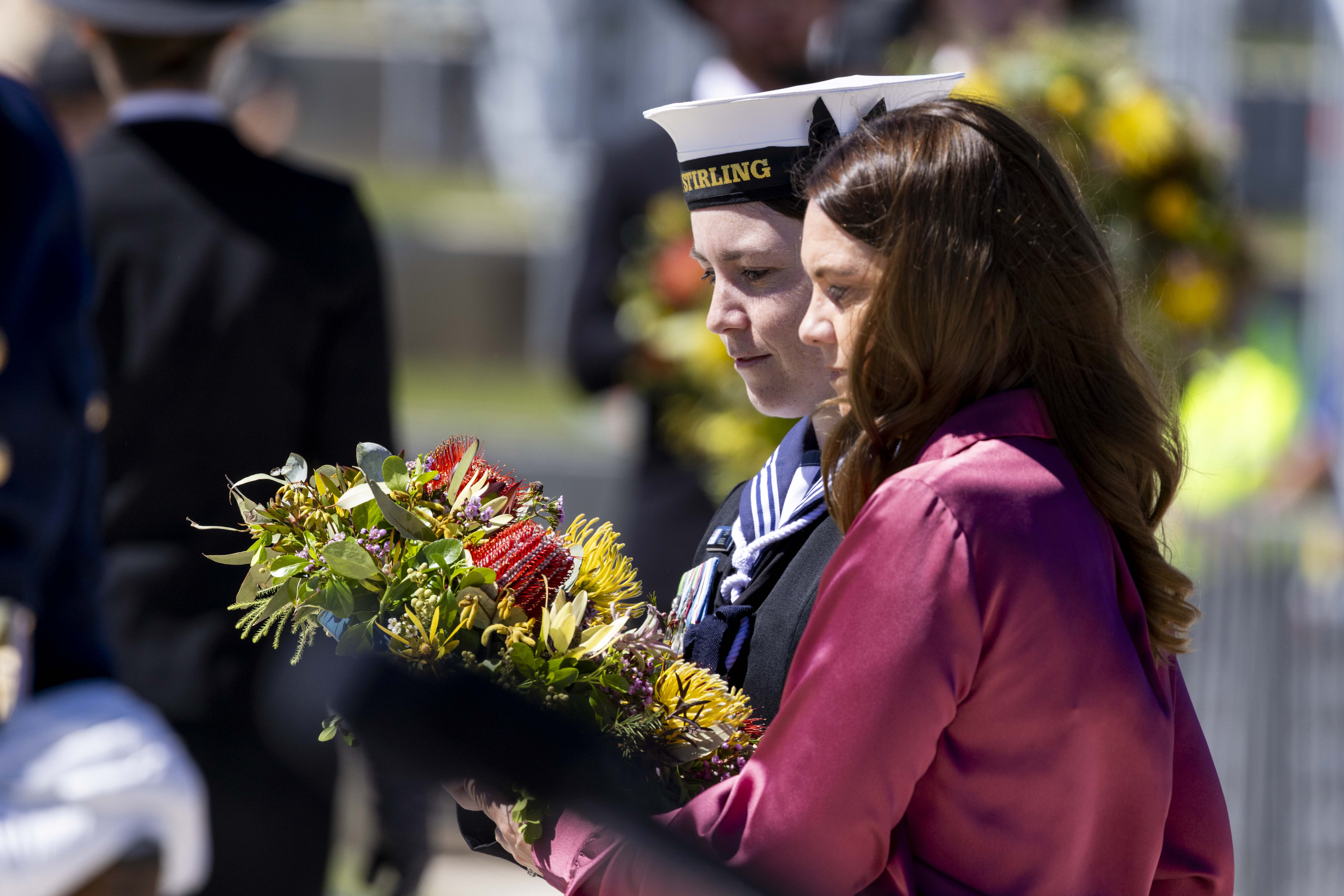
Speech delivered on 11 October 2026 at the Australian War Memorial.
Good morning, everyone.
I acknowledge the Ngunnawal people, their Elders, past and present, as the traditional owners of the land on which we meet, and recognise any other people and families with deep connections to the lands of Canberra and the region.
I extend that respect to all Aboriginal and Torres Strait Islander people here today, those watching on the broadcast, particularly those who served or continue to serve our country.
Today, as we gather here, commemorations are taking place across the country. And as Matt Anderson PSM has done, my thoughts are particularly with Corporal Brendan Hannam’s family and friends, and with his fellow soldiers in Darwin today, where grief at his tragic death is still very raw. We also think of the soldiers injured in that training accident.
Corporal Hannam served in Afghanistan, and his loss is felt well beyond Australia, well beyond these shores. I'm grateful to the Chief of the Defence Force, who shared with me a message of condolence sent to him from the Chairman of the NATO Military Committee, who wrote the following:
'Training to keep our forces ready is never without risk. Those who accept that risk every day deserve our deepest respect and gratitude.'
Here today, I acknowledge the veterans of Afghanistan, your families, and those who served beside you, and especially those families who remember you all.
I also acknowledge all serving defence personnel here today, and all who served our country in that long war in Afghanistan. And as Colonel Clingan has observed all the protocol acknowledgements, I will simply acknowledge that we have so many distinguished guests here today, and I acknowledge them all.
Inside the Memorial's entrance today stands the cenotaph from Camp Holland in Tarin Kot. In Afghanistan, Australians gathered around it to remember comrades who had died.
Its words are spare: ‘Lest we forget. Tarin Kot. Afghanistan.’
Today, at this remembrance, we continue that remembrance.
Twenty-five years ago, Operation Slipper began, the beginning of Australia's longest war. Over twenty years, many thousands of Australians served in Afghanistan or in supporting roles across the Middle East. The work changed over time. They fought, rebuilt, trained, and advised; carried supplies in and the wounded out; protected and saved lives.
We honour our sailors, soldiers, and aviators; our police, diplomats, aid workers, and civilian personnel; and the Afghan and coalition partners who served so well beside them- for their extraordinary courage and their skill.
Many of you deployed more than once, and you know what those years demanded. This is what we gather to recognise: what Australia asked of those who defend our freedom, and what so many of them gave.
This Memorial's Roll of Honour names forty-seven Australians who died as a result of their service in Afghanistan. Two hundred and sixty-three Australians were wounded. And their families bore it all.
To all who mourn, including families bereaved since Australia's service ended, we remember those you love.
Serving as a diplomat in Afghanistan, Fred Smith OAM wrote Sapper’s Lullaby after the deaths of Sappers Darren Smith and Jacob Moerland.
As the haunting refrain of the song says so completely:
So soldiers, sing me a sapper’s lullaby
You give it your all, knowing if you should fall
That all good things must die.
For many who returned, the unimaginable consequences endure – trauma, chronic pain, and the often distressing memories carried into ordinary life. But, also, the carriage of pride of serving our nation in a long, difficult, and dangerous war.
And, for many, the memories of deep friendships and a sense of accomplishment.
Here at the Australian War Memorial in Anzac Hall, the original Tarin Kowt welcome sign stands against a recreated blast wall, where Australians who served across the Middle East have added their messages.
Like many of you, I have spent time reading them. Among them are these words:
'Never above you. Never below you. Always beside you.'
Families stood beside you throughout those years, and long after to now.
Army veteran Davina Mansfield has described life while her husband was deployed to Afghanistan. Children went to school; birthdays came; bills were paid – and she waited. They all waited.
His return brought another major life adjustment. As Davina puts it: 'you have to find each other again.'
Many families continue to care for loved ones, year after year. And to the children of veterans, including those now grown, your childhoods are part of this history today.
Our gratitude for service must always be felt in the character and quality of the generous support of our veterans and their families, and of those who continue to serve.
We must all reach out with kindness and respect, always without waiting to be asked.
For what you all gave, on this day, on behalf of all Australians, we say thank you.
Our gratitude must endure.
Our care must not wait.
Lest we forget.