


I want to acknowledge that we're on Cammeraygal land and pay my respects to Elders, past and present. I acknowledge that just across the water is Gadigal land. This was a very important place for the Gadigal and the Cammeraygal. Those communities took care of this land so beautifully for thousands of years before we got to have a chance to have this beautiful location here at Kirribilli.
So, I acknowledge Gadigal and Cammeraygal Elders, past and present, and acknowledge any First Nations people who are here this evening with us.
I also want to acknowledge our very special guests, the co-patrons of the Women and Infants Research Foundation, the Governor of Western Australia, His Excellency the Honourable Chris Dawson AC APM, and Mrs Darrilyn Dawson. They've become friends of mine. When I was first announced as the 28th Governor-General, I travelled around the country to meet the governors, to speak to them, to get their advice before I took office, and I have to say, Chris and Darrilyn were just so generous in your advice, your counsel, and your support in the time that I've been Governor-General. I want to say thank you, and it's lovely to show you a little bit of hospitality in return, having spent a number of times actually staying at Government House in Perth, you've been wonderful hosts and friends. So, it's lovely to have you here, particularly as co-patrons tonight.
Now the ambassadors who are here tonight, Amy Hussey and Mike Hussey. Lovely to see you. Welcome as well to Sydney.
And there's our Chair, Scott Steinkrug, there you are. Welcome, and to all of your board members who are here tonight, everyone is very, very welcome.
Chief Executive Officer, the indefatigable – I know that you get things done, we were discussing that just before coming in – Deborah Attard Portughes OAM; Your Chief Scientist, Professor Matt Kemp, the tallest man here tonight.
A few other people I just wanted to call out. Wendy McCarthy AC is here, a regular visitor here, both here and at Government House in Canberra. Someone who has been part of things that have changed for women, for families, for children, for babies, but for so many others over the course of your life. Wendy, it's lovely to have you back in here. I think ostensibly because of your relationship with The Parenthood, but not exclusively even the relationship with this organisation.
We have many generous philanthropists here with us tonight. I won't name you all because I know you're terribly humble, but we have many Sydney-based philanthropists who are here tonight, and I think showing a deep interest in the work we're going to talk about tonight.
And of course, the researchers, health professionals, volunteers, families, and supporters who are all here. You are all very special guests here tonight.
Now, before we begin our celebration of your 50th anniversary, I think I should say a few words about the horrible week the country has had the last few days, but particularly the attack on Monday against Dr Helen Haines MP, the beautiful, courageous, such dignified Member for Indi.
Helen and I are friends. I've known her for a long, long time. And in a bittersweet moment two weeks ago, I was with Helen in Euroa, in her seat at Indi. We were there to thank first responders across all kinds of response for their extraordinary care of her community and those in Strathbogie and Shepparton and the Longford fires; those that lost so much in January this year, and a number of flood victims as there had been floods in that region as well in recent years.
And we were standing in a community recovery hub with people who do so much work to support those who've been through tough times. And we were talking about the rise of incivility, the rise of danger for all people who stand up in public life, from councils and local government, state government, and federal government. And she and I were thinking about how we would bring people together and talk about kindness and care, and we would think about how to bring all Australians along to be proud of our democracy and talk about decency. That was the last thing we spoke about as I left the Euroa pub.
She is a person of great kindness and dignity. She respects everyone as she meets them. That doesn't mean she hasn't been a very strong advocate for her community and had to take on some quite considerable fights. They’re the way that those should happen in Australia, with care for those that didn't want what she was wanting for her community, never disrespecting the person, always thinking about the idea of finding compromise.
Her husband Phil, you may have seen speak about how she is and how she's recovering, describes her as someone with a ‘beautiful heart and a beautiful mind.’ So, she may have lost her legs, and we don't know what the full extent of that will be, we'll know more in the days ahead, but her beautiful heart and beautiful mind at the moment are doing very, very well. And I've said that the nation should think in respect of her and the way she has conducted herself that we all need to individually exercise our muscles of decency and kindness as much as we possibly can.
I know that Australians across the country and all of you here have had her in your thoughts tonight. We've lit a candle because the family's asked everyone around the country to light a candle if you can. We've lit one on your behalf, so you can consider yourself part of the candle that's being lit here at Admiralty House.
We're going to keep Helen very much in our thoughts, as I'm sure you will. And I also think that you are the kind of people that are just like Helen and Phil – everyone in this room has done things not just for this organisation, but across the entirety of your lives and careers and the work you've done, have always done with great decency and respect in ways I wish the rest of the country would follow suit.
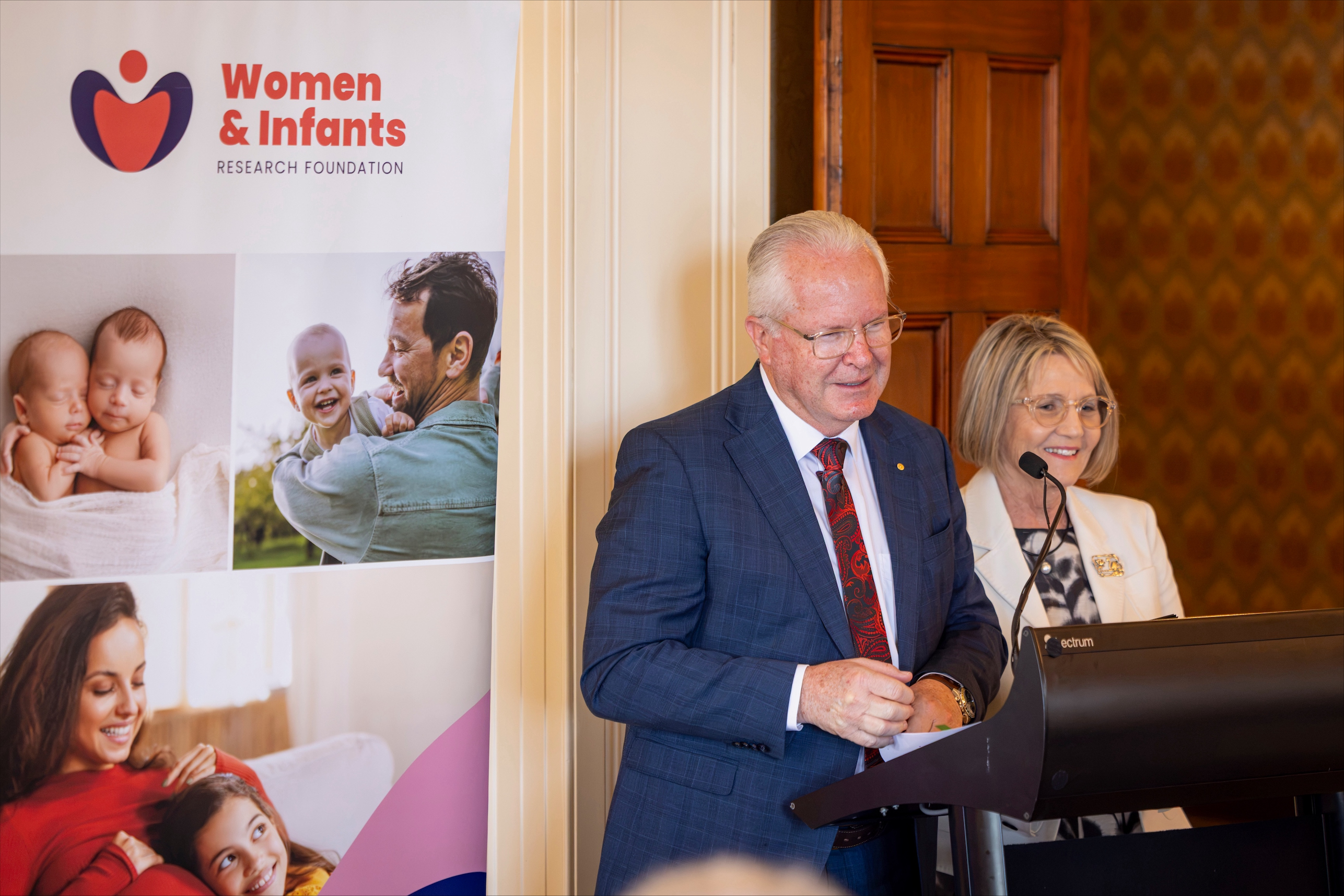
So, it's actually very special to have you in here tonight, and for us to be doing something very special and celebrating 50 years of the kind of work that Helen and those that believe in our great democracy and taking care of others would be so proud of. And it is a privilege that we're hosting 50 years, half a century of the Women and Infants Research Foundation.
This was on the initiation of the Western Australian Governor and Mrs Dawson. I was with some of you in Perth for World Prematurity Day in 2024. It was a wonderful event in your ballroom, it was glorious. I think I talked then about care, kindness, and respect, and I knew I was talking to an audience for whom that was core business, and we talked about how that can be a powerful force for discovery and for change.
Governor Dawson, Mrs Dawson, Chris, Darrilyn, thank you for your support, not just as co-patrons, but for everything you do. I know for this organisation and many others, not just in your role, your vice-regal roles, but as citizens, as you always have, it means a great deal that we're able to do this all together tonight.
This morning, I was really lucky to spend the morning at the Sydney Children's Hospital in Randwick, visiting the new facilities for children and their families, and to meet with a number of the young patients, and then meet the medical and nursing teams. I also met with a number of the medical teams that worked on the families and people affected by Bondi.
We're coming up towards the first anniversary of December 14th, and Sydney Children's Hospital in Randwick picked up a lot of the very deeply, deeply traumatized people. They also worked on the lovely Matilda Bee, who sadly did not survive, and we were talking about how they were feeling a year later after losing Matilda, but heartened by the fact that the family and her little sister Summer are doing well. We'll be seeing them again in December to check on them and make sure that love and kindness of all Australians, for those who are so badly damaged through that process, know that they are thought of.
Tomorrow, really importantly, even on the eve of it, Children's Week begins. It's a time to celebrate our children and their right to enjoy a full and happy childhood. And in my role, I have many opportunities, as you know, those involved in this organisation, where you hear their ideas, you learn what's important to them.
Helping children get the best possible start in life isn't just about a couple of people who parent them. It is a lot of people, and people like the late Margaret Lay, who volunteered at King Edward Memorial Hospital in Perth for more than 30 years. We're very well known to those of our guests who are here from the West. Well into her 80s, she was still coordinating hundreds of knitters and sewers across Western Australia, and visiting the hospital every week to assemble baby clothes and blankets. She also helped the hospital social workers establish packs for bereaved parents for the information and keepsakes to support them through their loss.
I think she would have loved to see a work that I hope you all see tonight that's hanging in the official study here, called ‘Hand knit toy’. It's by a wonderful Australian artist, Lucy Culliton. Lucy painted the hand knit toys that were finalists in the craft section of the Royal Sydney Easter Show in 2005. It celebrates the work, the patient work of the knitters and crafters making those things to raise money, to give comfort. The greatest carers across the country, and we never really say thank you because we think of them just as knitters and women who sit and craft, and in fact are the backbone of so much of the work that goes on every day across this country, and particularly for the children and parents that you care so much about.
Her family travelled from across Western Australia for this year's Community Knit-in to celebrate her contribution. To everyone carrying on that work who might be here tonight, thank you. The clothes and the blankets mean practical help for families and the comfort of knowing someone is thinking of them. So that's the same contribution in a small way that runs through everything that we see for Women and Infants Research Foundation, the research and the teams who have devoted absolute years to it.
Professor John Newnham AM has told a lovely story about recording his Australian of the Year message. He was supposed to talk about himself, and we often do ask the Australians of the Year to do so, but he kept coming back to his team. I suspect a few of you know that feeling that it's always about someone else for those we try to celebrate. The West Australian prevention program that John and his colleagues developed saw an estimated 200 fewer preterm births in its first full year. Just imagine what that extra time to grow can mean for a baby, the baby's life, and for the family.
And Professor Matt Kemp, you and all the scientists, doctors, nurses, and midwives are working tirelessly to turn research into better care. Thank you for your skill and determination. And WIRF’s work goes well beyond pregnancy, as so many of you in this room know, including research into endometriosis. Anna Ainsworth and her family made the biggest contribution ever to endometriosis research at UNSW. It's wonderful to have you here with a connection to that topic, and you're also looking at cancer. Women, as Wendy knows, and everyone here knows, deserve to be listened to deeply and to have their health taken seriously throughout our lives at all stages.
And of course, research also depends on the generosity of people willing to take part, sometimes for decades. There are many of you in this room that have done that for WIRF, have done that for many, many other organisations that are connected to the health of children and families.
WIRF was one of the founding partners of the Raine Study. Esme became its 500th third-generation participant. Her father Phil was one of the original babies in the study, and her grandmother joined while she was pregnant with him. Now Esme is part of that story too. That's remarkable. How extraordinary!
I want to thank everyone, the families who keep coming back, sharing your time in your lives with WIRF. It's an extraordinary big gift being given to the people that you may never meet. Amy and Mike, as ambassadors, together with many of the other people here tonight, you've helped people understand the importance of this research by sharing your own family's experience. Thank you for being so committed to supporting their work and being with us tonight and traveling across the continent to do that, it means a great deal.
To the Chair, to Scott and your board and Chief Executive, Deb, and all of your team who are here tonight and helped us produce such a lovely event, thank you for bringing people together around this work all across the country, and for sustaining it.
And to every donor and supporter and friend, your generosity gives researchers the time and resources to keep pursuing better answers, and that's what we need. You've shown what care can achieve, and it's backed with careful research and a whole community willing to support it.
This is an important anniversary: 50 years, half a century. I hope you all feel enormously proud of the remarkable achievement over those 50 years. There'll be 50 more, I'm sure, with greater breakthroughs and more hope for families and children and babies. And I know you'll never stop; it just keeps going.
Happy birthday! I'm glad you're here to celebrate with us.